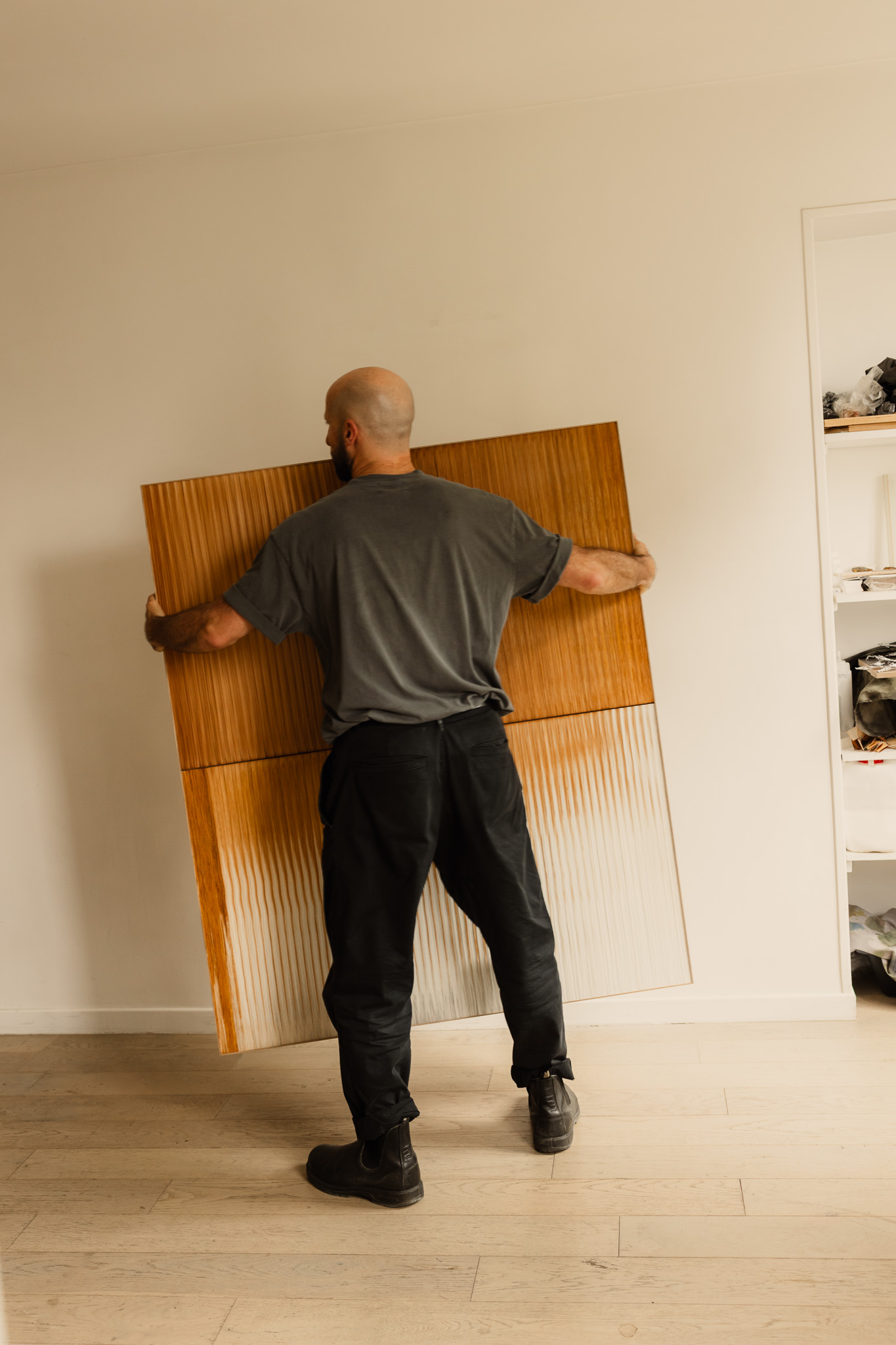
Jean-Philippe Lagouarde – Solo Show 2025
LINK TO PDF – JEAN PHILIPPE LAGOUARDE
Link to Single Shots – Link to Exhibition Views
For this exhibition, Jean-Philippe Lagouarde turned away from the wilderness that had long fed his work—a retreat from the city’s noise and pressure. This time, he deliberately placed himself in a state of scarcity, with no escape route. For him, that meant confronting his immediate surroundings:
Rue du Faubourg Saint-Denis in Paris. This is not just any street. It’s a dense, inescapable reality he had long resented. At this unruly crossroads, the city’s extremes converge and collide. A chaotic, transgenerational, polyglot theatre of shopkeepers, construction workers, young creatives, elders, party-goers, tourists, and drifters. A place of radical proximity, where worlds rub shoulders, willingly or not. It’s a frontier between opulence and collapse, the chic and the shattered.
A borderland between gentrification and survival. A wave that crashes into you, over and over. A place of overflow, of constant friction, and relentless escalation, where disorder isn’t the exception, but the rule. An introvert’s nightmare. It was the opposite of his comfort zone. And yet he stayed.
Years later, the traffic hasn’t eased. The crowd hasn’t thinned. But the street has forced itself into focus through its sheer intensity and its refusal to be ignored. It has become a subject. His subject.
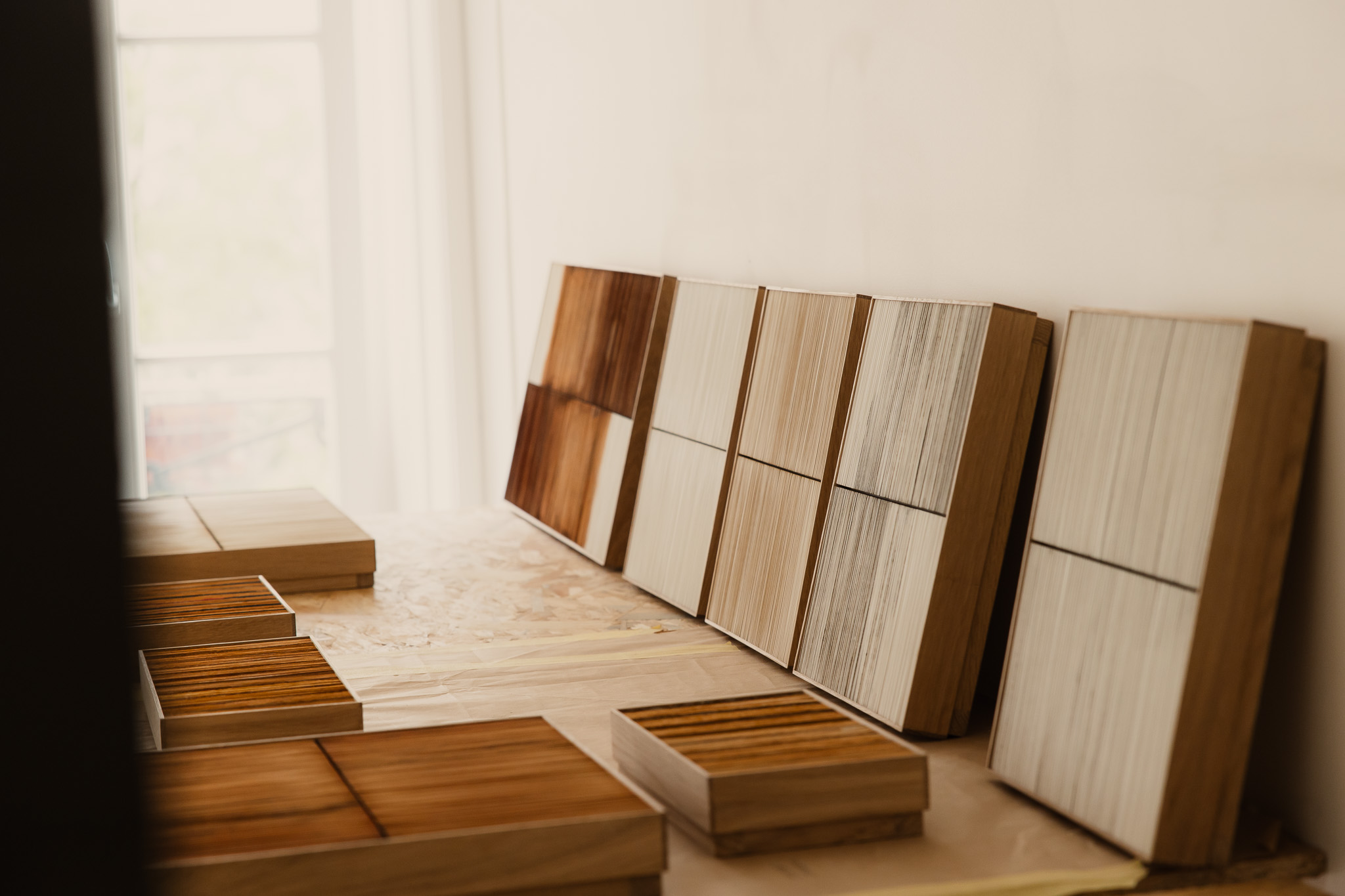
Lagouarde’s process began, as always, with walking and collecting. This time, he gathered pigments from the city’s surface: dust, petals, moss clinging to walls (those rare patches of green in the area), layers of graffiti built up over time, water drawn from potholes, a fountain, or the rain. He collected the residue of street life—used cooking oil left in cans outside restaurants, paper peeled from torn posters, and scraps of metal picked from the ground.
Each fragment a silent witness to the flow of people passing through. And amid this improvised gathering, the humans behind these traces began to surface. The street watched him work, not with suspicion, but with a quiet curiosity. It let him in. People stopped. Watched. Spoke. Brief exchanges, glances, fragments of conversation—encounters, countless and unplanned, that gradually left their mark. One woman in red interrupted him; that same red would later resurface in a piece, by chance. Another man, met at dawn, dipped his finger into a puddle of oil to moisten his lips. A moment of raw dignity, one among many.
Each encounter, however fleeting, found its way into the work. Just like the street they reflect, the pieces resist linearity. Streaks or ruptures of unexpected color break the surface, catching the eye and pulling it off course. These interruptions serve as visual echoes of what it feels like to navigate this street, where no one walks in a straight line—where every step can be diverted by a person, a sound, a gesture.
These moments of disruption transfigure the chaos into form. And they remind us that everything bends and unfolds. Everything is already there. At the top of the street stands the triumphal arch of the Porte Saint-Denis, bearing the words Ludovico Magno—Louis the Great. A monument barely noticed anymore, set against the real life unraveling below it. But also a reminder: that from long-gone grandeur and ruin, meaning can still be found.
Lagouarde has managed to carve out a sense of calm from the chaos around him. By capturing and shaping its overflow, he made it more bearable, less overwhelming. He hasn’t just engaged with his street, he’s learned to live with it. Perhaps even to be at peace with it.
Fiona Castro Le Brun
Photos By Nolwenn Pernin – https://www.nolwennpernin.com
Link to PDF – lvdovico magno_jean-philippe_lagouarde